Tailor-Made Portugal Trips

Where the Mediterranean ends and the Atlantic begins.

Understanding Luxury Portugal Vacations

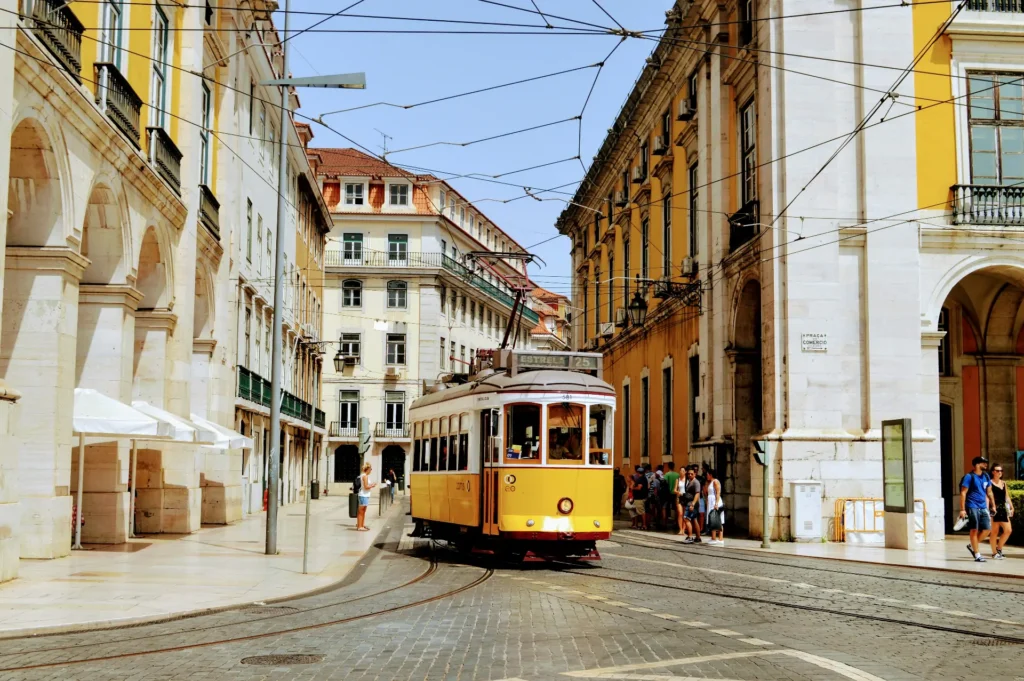
Portugal is the only country in the Mediterranean collection that doesn’t actually face the Mediterranean. It faces the Atlantic. That single fact shapes almost everything about traveling there. The food leans on cod and sardines rather than the lighter inshore fish of the Aegean or Adriatic. The wine, too: vinho verde is sharp and low-alcohol up north, port is fortified and aged downriver in the Douro. The coast gets real waves. And the cities, Lisbon and Porto, were built facing water that led to Brazil and Angola, to Macau and Goa, rather than to Italy and Greece. Lisbon itself sits across seven hills, connected by cobblestone streets and yellow trams that keep grinding up them. It’s also the home of Fado. What is Fado in Lisbon depends on where you hear it: the amplified version for cruise groups, or the real thing in a back-room tavern in Alfama where the singer is close enough that you can hear her breathe between lines.

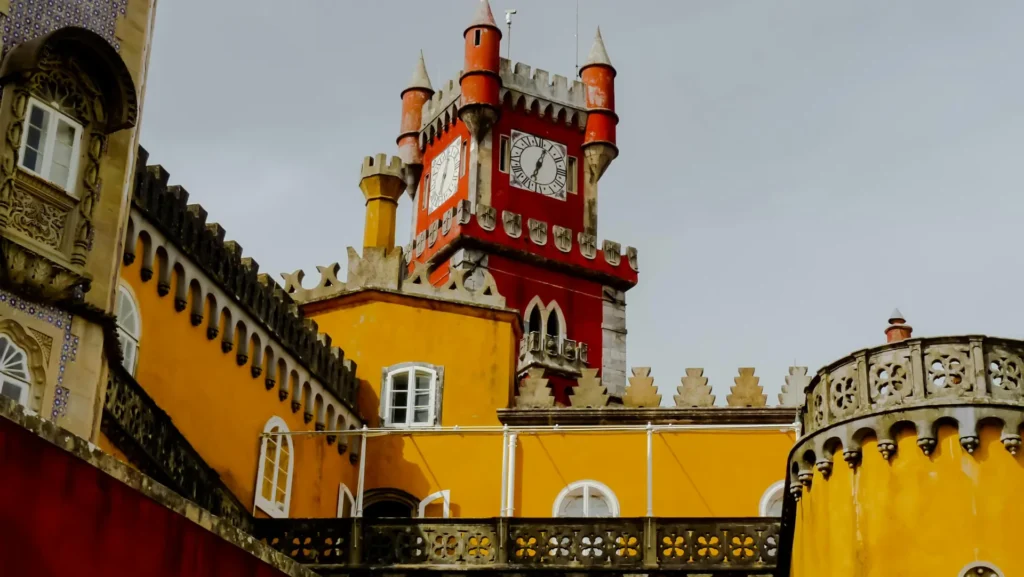
The country opens up fast once you leave Lisbon and Porto. Thirty minutes west of the capital, Sintra has its own cool, damp microclimate and a cluster of nineteenth-century palaces built during the Romantic era as a kind of fantasy. The Algarve, four hours south, is where the cliffs turn golden in afternoon light and sea caves open up along the coast. Inland, the Alentejo runs on a quieter register. Cork oak plains and single-owner wine estates dominate the landscape, and the night skies are among the darkest in Europe. Farther out in the Atlantic, Madeira and the Azores are a different country entirely: volcanic and green, with food and wine traditions that share little with the mainland. Travel to Portugal works unusually well as a two-week itinerary because the country is geographically compact. The cities and wine country pair naturally, and there’s still room for the cliffs or an island week, without the transit drag that a similar range would require in Italy or Greece.

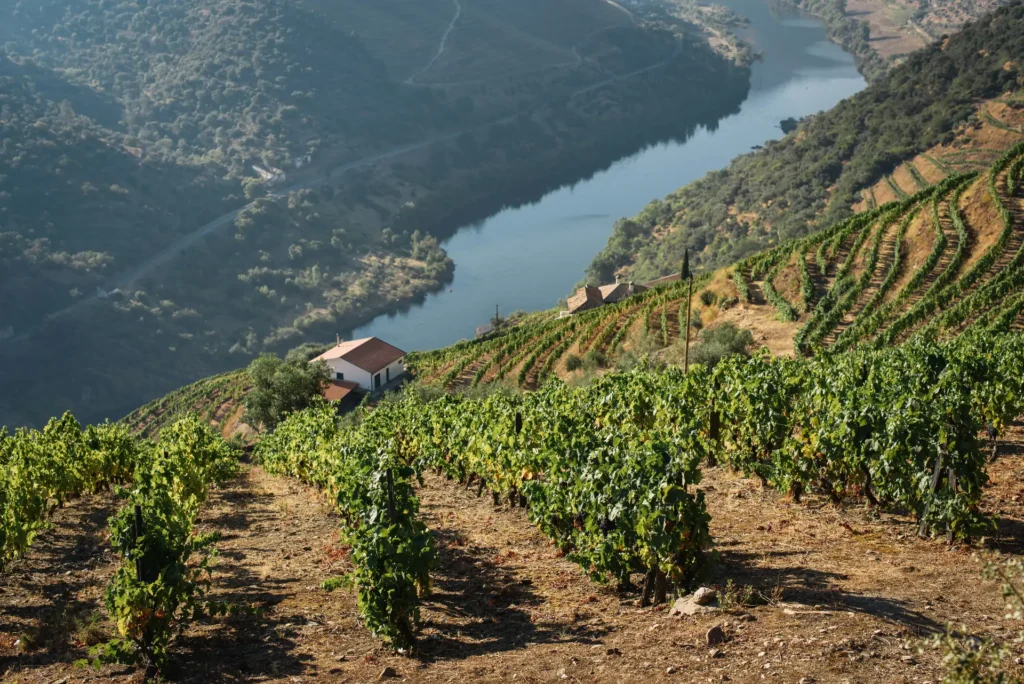
The days in Portugal tend to build around food and water. Luxury Portugal vacations done well usually mean getting ahead of the group itinerary. That can look like a morning on a small private sailboat through the Benagil sea caves in the Algarve before the public catamarans launch. Or a tasting at a family-run wine estate in the Douro with the actual winemaker walking you down the terraces, rather than a staffer reading from a script. Portugal rewards travelers who care about eating well. The country has an outsized restaurant scene for its size, with regional specialties that don’t quite travel: cataplana on the Alentejo coast, grilled sardines in Cascais, rice dishes like arroz de marisco that most travelers miss entirely. The right Portugal trip puts you at the chef-driven, locals-favorite tables rather than the English-menu spots closest to the main squares.

The logistics in Portugal are genuinely easier than most of the Mediterranean, with one caveat. The national train network between Lisbon and Porto is fast and reliable. Domestic flights to Madeira and the Azores are short and frequent. The caveat is the interior. The Douro Valley and the Alentejo work better with a private driver than with a rental car (and the same goes for the smaller coastal towns), both because the roads are narrow and because the drivers double as informal guides who know which winery is releasing the good vintage and which restaurant just had a chef change. The drive from Porto into the Douro is roughly ninety minutes, which makes the valley a comfortable fit in any northern itinerary. Planning Portugal luxury travel also means getting the island connections right, so the Madeira or Azores leg feels like part of the trip instead of two airport days tacked on.

Steven’s Honest Take

A few things worth knowing before you plan a Portugal trip.

Lisbon and Porto are both steeper than most people expect. Both cities are built on hills covered in polished cobblestone, and a boutique hotel that photographs beautifully online can still mean four flights of outdoor stairs between the car and the front door. I filter for vehicle-friendly access during the property vetting, and my Virtuoso relationships mean I have a direct contact at each property when something needs to be solved in real time, rather than waiting on a help line. Arrival day sets the tone for the whole trip.

Shoulder seasons are where Portugal is at its best. May and September give you the coast without the July and August compression, and September in the Douro lines up with the grape harvest, which is the single best week of the year to be in the valley. If you’re locked into summer dates, I usually recommend the Alentejo coast an hour north of the Algarve, where the beaches stay quiet and the restaurants don’t turn tables.

One more: if your trip includes the Douro, do not rent a car. The valley roads are narrow with real switchbacks, and you’ll want to actually taste the wine. A private driver is non-negotiable for that leg.

ellow and white tram on a narrow cobblestone street in Lisbon's historic center, a common sight on tailor-made Portugal trips
Terraced vineyards rising above the Douro River in northern Portugal's wine country
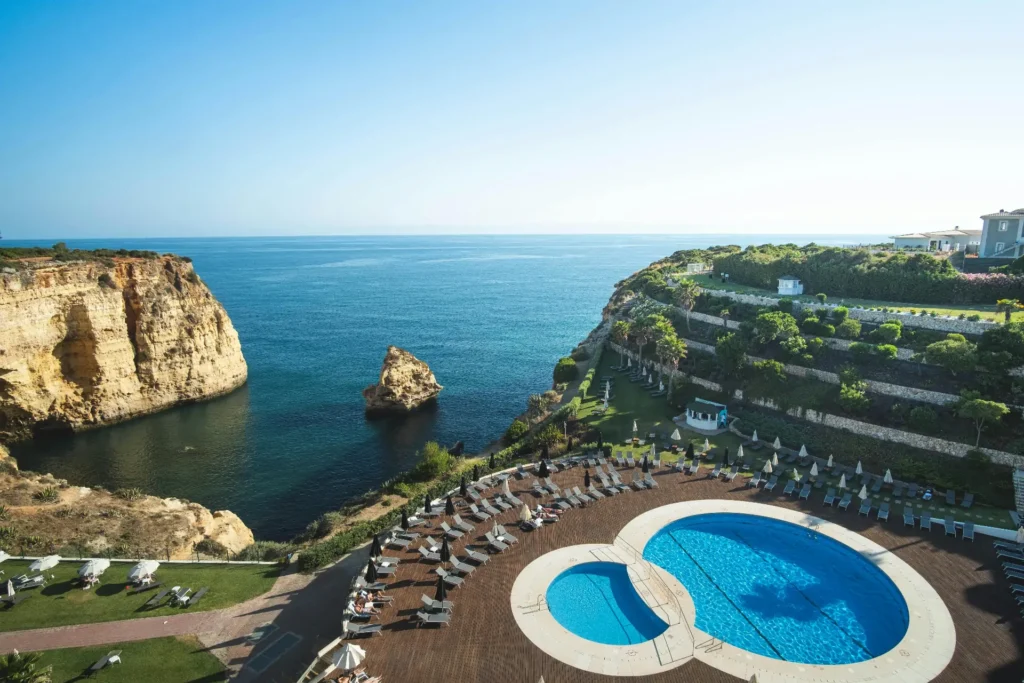
Sun loungers around a private pool at a cliffside luxury resort overlooking the ocean in Faro, Portugal's Algarve coast

Have questions about planning your trip to Portugal?

How We Plan Tailor-Made Portugal Trips

Family Trips

A family trip to Portugal works because the distances are short and the culture genuinely likes kids at dinner. Portugal with kids usually means an Algarve coastal villa with a private pool and walkable beach access, so daily transit stays minimal and the parents get an hour of quiet while the kids swim. Portugal with teens opens up the active layer: surf lessons at a point break near Lagos, or kayak runs into the sea caves the guided catamarans can’t reach.

Couples & Milestones

Whether a honeymoon in Portugal, an anniversary, or empty nesters discovering the world, this country gives couples the food and wine depth of Italy or France without the crowd density. The typical structure is a high-energy opener in a boutique Lisbon neighborhood with luxury tours Lisbon style access to the Fado venues and private food-market visits that happen before the day-trip crowds arrive. The second leg drops the pace with a quiet stay in the Douro Valley or the Alentejo.

Friends & Private Groups

Portugal has the private-villa and quinta inventory that most Mediterranean destinations don’t, which makes it a strong fit for groups of friends or multi-family travelers. Algarve coastal villas come with private chefs and pool staff. Douro wine estates accept full-property bookings during off-peak weeks. A group can travel together without splitting up across multiple boutique hotels.

The Best Time to Travel to Portugal

The shoulder seasons of May and September are the sweet spot. The water is warm enough for the coast and the heat is manageable. The peak-summer crowds either haven’t arrived yet (May) or have already left (September). September has an additional edge in the north because it runs into the Douro grape harvest, when the wine estates are actively working. The best time of year to visit the Azores sits a little later, roughly June through September, because the Atlantic weather that far out needs the summer window to stay predictable. Winter is viable for Lisbon and Porto as a cities-and-food trip, though Algarve resort towns wind down by November.

Apr – May
Jun – Aug
Sep – Oct
Nov – Mar
Weather

Mild, 60-75°F

Hot, 80-95°F

Warm, 65-80°F

Cool and wet, 50-60°F

Crowds

Moderate

Peak capacity

Moderate

Low

Risks

Occasional coastal rain

Heat, Algarve traffic, inflated rates

Early autumn rain in north

Algarve closures, ferry disruptions to islands

Best Regions

Lisbon, Porto, Sintra

Alentejo coast, Azores

Douro Valley, Alentejo

Lisbon, Porto, Madeira

Our Portugal Outlook for 2026

Portugal in 2026 has two very different gravitational pulls. The mainland keeps producing the classic Lisbon-Porto-Douro itinerary that’s worked beautifully for years, and that’s still the right starting point for a first trip. But the more interesting Portugal stories this year are happening offshore and inland, in places that weren’t even on the American radar five years ago.

Madeira and the Azores as nature-forward escapes

Madeira is having its moment. The “Hawaii of Europe” comparison gets thrown around for reasons that hold up: volcanic terrain, sub-tropical climate, and a hiking network built on old irrigation channels (the levadas) that doesn’t really have an equivalent anywhere else in Europe. The Azores, further out into the Atlantic, attract a different traveler entirely. More remote, less polished, geared toward whale-watching and dramatic volcanic coastline rather than resort amenities. Both islands are absorbing demand from Americans who want Portugal without the Algarve’s summer crowds, and the trip profiles are different enough that it’s worth getting the choice right.

Slow, wine-centric summer travel

The bigger mainland shift in 2026 is the move from coastal resort stays toward slower itineraries built around the wine regions. The Alentejo and the Douro Valley are the natural anchors. The pousada network (Portugal’s parallel to Spain’s paradores) supports this directly, with historic inns scattered across the countryside that work as both lodging and cultural reference point. The most interesting luxury tours of Portugal in 2026 are anchored on the wine regions and the pousadas rather than the coast.

Spring break alternative for North American families

There’s been a noticeable uptick in North American families choosing Portugal for spring break, particularly families with kids old enough to enjoy a city. The Algarve is the obvious anchor, but Lisbon and Porto are also absorbing demand, with Madeira increasingly in the conversation. Direct airlift from the East Coast keeps travel days manageable. English is widely spoken in tourist areas, and the food culture rewards even casual exploration with kids. For families looking past the Caribbean for the first time, Portugal is one of the better landing spots.

Frequently Asked Questions About Portugal

Portugal is part of our Mediterranean collection. Explore the other destinations in the region to find the right combination for your trip.

Let’s Talk About Your Portugal Itinerary

Tell us what regions catch your interest and how you prefer to spend your days. We will take it from there.

Scroll to Top