

Steven is certified by Turespaña (Tourism Institute of Spain).
The redistribution away from Barcelona
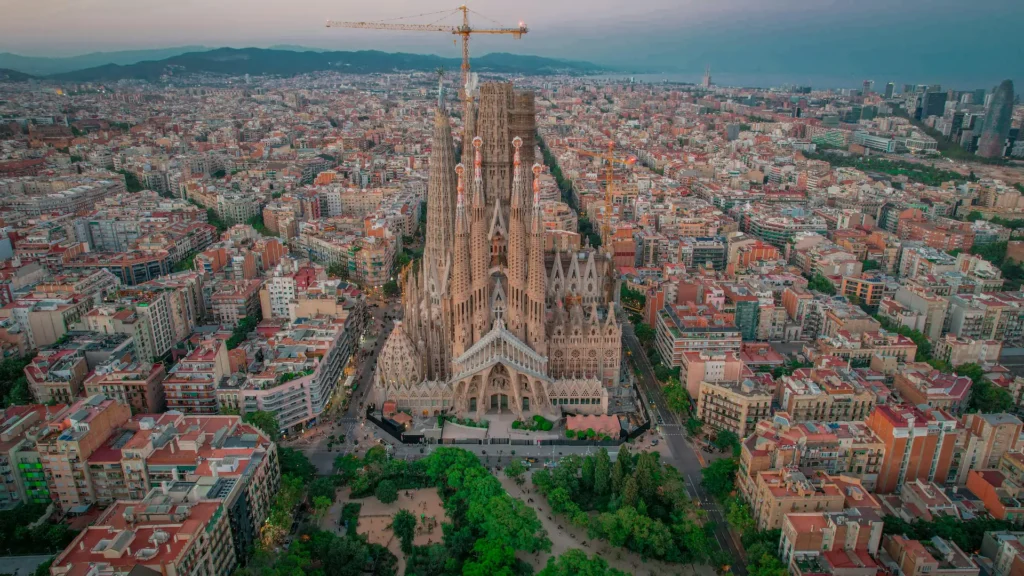
Barcelona is still Barcelona, and most first-time visitors will still see it. But the conversation around overtourism in the city has reached the point where hotels are increasingly the better play over apartments, and shoulder-season trips are increasingly the better play over August. Andalusia is absorbing a lot of the redirected interest. Granada and Córdoba alone justify a week between them, and the white villages and road-trip-friendly geography turn the rest into a genuinely engaging drive. For travelers who want southern Spain without the Costa del Sol resort grid, it’s a strong fit.
Paradores and the rise of stay-with-story
The Spanish parador network is having its moment with American travelers, and it’s not hard to see why. These are government-run hotels installed in converted historic buildings: former castles and monasteries, plus fortified palaces built into the walls of medieval cities. They give travelers a way to anchor a road trip around stays that double as the experience itself. The parador in Granada sits inside the Alhambra grounds. The one in Santiago de Compostela is a 16th-century pilgrim hospital. This kind of lodging is increasingly displacing the international hotel chains in serious itineraries, and Spain has the deepest network of it anywhere in Europe.
Canary Islands as a year-round destination
The Canaries used to register, for Americans at least, as a Northern European winter sun escape and not much else. That’s changing. Tenerife and Lanzarote for the volcanic landscapes, Gran Canaria for the climate, La Palma for the night skies. The combination of stable winter weather and well-developed airlift has made the islands a credible alternative for travelers who would otherwise default to the Caribbean for January and February, and the volcanic national parks give the trip a backbone the Caribbean cannot match.