
Tailor-Made Chile Trips

The driest desert on earth at one end of the country, the southern ice fields at the other.

Chile Luxury Vacations: A Country of Distinct Regions

At 2,600 miles long and an average of just 110 miles wide, Chile is squeezed between the Andes and the Pacific. That narrow corridor is exactly what makes travel to Chile so interesting. Each region operates as its own distinct world. The country works best as a hub-and-spoke itinerary: anchor in Santiago and take short regional flights out to the extremes. Pick one or two regions per trip. Travelers who try to cover everything end up leaving disappointed.

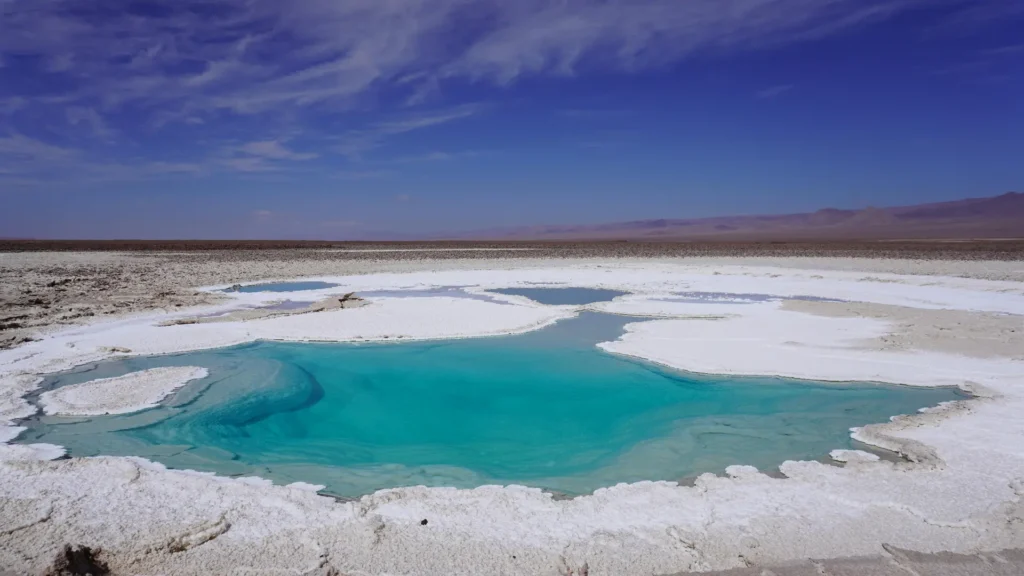
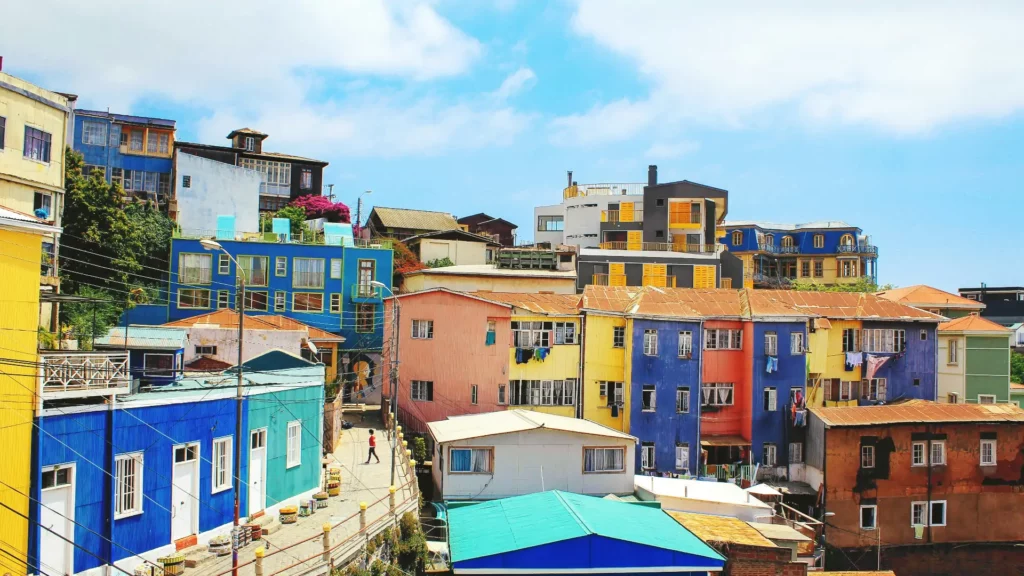
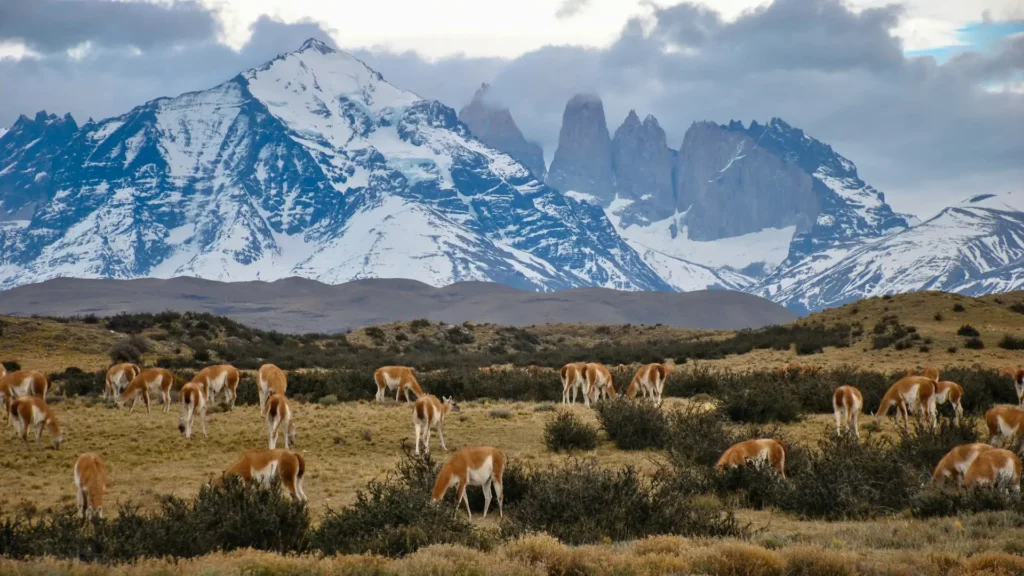
The range here is genuinely hard to match. In the north, the Atacama Desert is the driest non-polar desert on earth, sitting at high altitude with salt flats and geysers under skies so clear that the world’s most advanced astronomical observatories are built there. In the deep south, Chilean Patagonia turns to fjords and temperate rainforests, with the jagged granite towers of Torres del Paine at the southern edge. The country’s real depth shows up in the spaces between. Chile’s Lake District offers snow-capped volcanoes and deep-blue glacial lakes around Pucón. Chile’s Carretera Austral opens up a rugged, largely untouched stretch of coastline and forest that feels like a different country than the desert. The best custom-made trips to Chile pair two of these environments without rushing the transitions, often building in a few days in Santiago and the historic funiculars of coastal Valparaiso.

In the remote regions, the lodges that matter are all-inclusive adventure properties. Explora and Awasi are the two names that come up most often, and for good reason. These are not hotels in the conventional sense. They operate as private basecamps where the food and wine are excellent, but the real value is in the guiding. At a property like Awasi Patagonia, your villa comes with a dedicated 4×4 and a private guide. You track pumas or hike the French Valley at your own pace, completely independent of anyone else’s timetable. That model is what makes a trip here feel genuinely private rather than just expensive.

Planning a trip that spans the full length of the country takes some architectural thinking, and that is where having a specialist pays off. Domestic flights between regions pass through Santiago, so transitions between the Atacama and Patagonia include a capital stopover. That stopover is an opportunity to spend a night eating in Vitacura rather than a problem to work around. Lodge inventory in Patagonia sells out months before the season opens, and the shoulder season rewards travelers who lock in early. That is where luxury travel in Chile separates from booking a trip yourself: the timing and the access are handled well in advance, so the experience in the field is exactly what it should be.

Steven’s Honest Take

The most common thing I see with traveling through Chile is people trying to do too much. The distances between regions are not trivial, and the infrastructure in the Atacama and deep Patagonia is intentionally sparse. That sparseness is the point of going.

When clients want a two-week trip combining the Atacama with Easter Island and Patagonia, I redirect them. Easter Island is a five-hour flight from Santiago out into the Pacific. The Atacama is two hours north. Patagonia is three hours south. Try to do all three, and you spend roughly four of your fourteen days in the Santiago airport. Pick two regions and go deep. That is consistently how the best Chile vacations get built.

If you are going to Patagonia, pay close attention to how you get to the lodge. You fly into Punta Arenas (PUQ) or Puerto Natales (PNT), but Punta Arenas is still a four-to-five-hour drive from Torres del Paine. I arrange private 4×4 transfers for that stretch so you arrive without the fatigue of a shared shuttle.

The lodge properties worth staying at in Chilean Patagonia fill their best rooms months before most people have started planning. I book through my Virtuoso relationship at Awasi and Explora, which gets preferred inventory allocated before the general public gets access. If you are thinking about Patagonia, the conversation about timing needs to happen earlier than feels necessary.

Vast white salt flats and rugged terrain in the Atacama Desert on tailor-made Chile trips
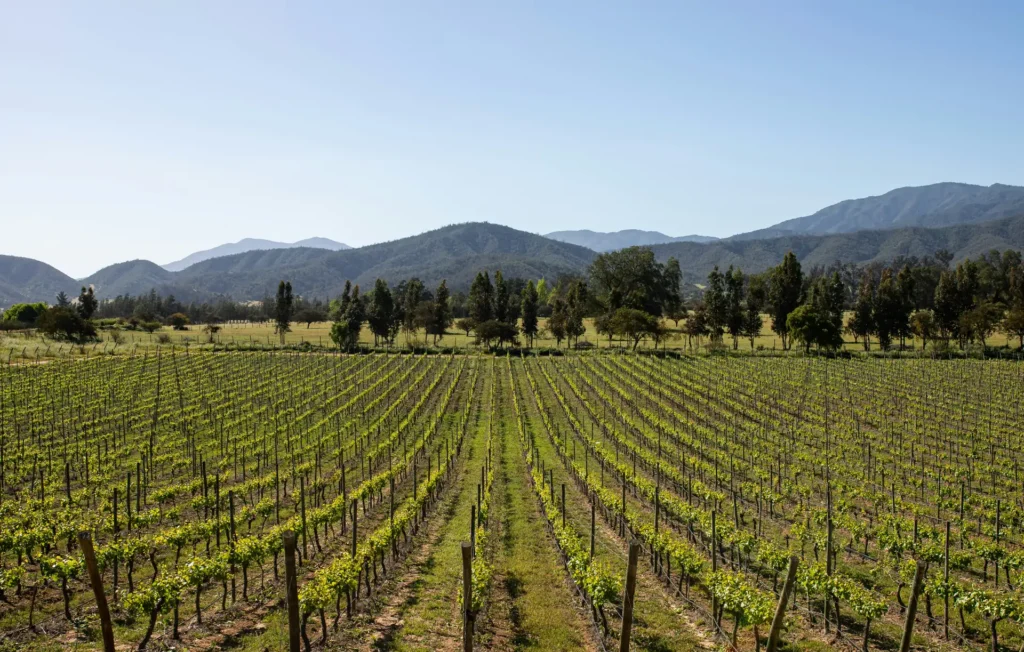
Rows of green vines stretching toward the mountains across a Casablanca Valley vineyard
Colorful houses and steep funicular railways built into the hillsides of Valparaiso, Chile
A herd of guanacos grazing on dry grass across a mountainous landscape in Torres del Paine

Have questions about planning your trip to Chile?

How We Plan Travel to Chile

Couples & Milestones

There are very few places left where you can stand outside at night and not know where the sky ends. The Atacama is one of them. For a honeymoon in Chile or a significant anniversary, that scale and a wine tour through Colchagua or Casablanca, with almost no one else around, tends to reset something.

Family Trips

A family trip to Chile works best when the teenagers are old enough to be genuinely challenged. In Chile’s Lake District around Pucón, that means hiking toward an active volcano or rafting a river that does not ask permission. In Patagonia, riding out across open steppe with a local baqueano is the kind of morning that does not show up on a highlight reel.

Friends & Private Groups

Awasi Patagonia is built for a multi-couple trip or a milestone group celebration. The property is a compound of fourteen private villas, and a buyout gives every couple their own villa with a dedicated 4×4 and a private guide. Five or six couples can take the place for a long weekend. The group heads out into the park independently each day and reconvenes for dinner and a glass of Carménère by the fire. Group trips to Chile at this scale only work in a handful of places, and Patagonia is the strongest case for it.

When is the Best Time to Visit Chile?

The best time to go to Chile depends on the region. The best time to visit Patagonia is November through March, when trails are open and the days are long. Easter Island is best in November or March to avoid peak humidity. The Atacama works year-round, though autumn gives the clearest skies for stargazing near the ALMA Observatory. In December, Patagonia and the Lake District are in full summer, with long days and the famous afternoon wind arriving reliably by midday. Trips combining two regions land best in late October or early November, before Patagonia crowds peak.

Nov – Feb (Summer)
Mar – May (Autumn)
Jun – Aug (Winter)
Sep – Oct (Spring)
Weather

Warm in Santiago (85°F), mild in Patagonia (55°F)

Crisp in south (45–60°F), harvest season in central valleys

Cold. Snow in Andes, Patagonia lodges closed

Mild and warming, 50-70°F

Crowds

Peak capacity in Patagonia

Moderate and falling

Low, except ski resorts

Moderate

Risks

Extreme wind in Patagonia (up to 70 mph)

Early snow in deep south by late May

High-altitude passes closed; Altiplanic winter in the north

Unpredictable spring rain

Best Regions

Lake District, Patagonia

Santiago, wine country, Atacama

Portillo (skiing), Atacama (cold but clear nights)

Atacama, Santiago, Easter Island

Our Chile Outlook for 2026

Chile is having a moment, but probably not for the reasons most people assume. The country has spent years marketing itself on adventure travel, and it has the geography to back the claim up. The 2026 shift, though, is that “adventure” no longer means what it used to mean, and the trips Americans are actually booking in Chile are softer, slower, and deeper than the country’s reputation suggests.

Adventure travel as mainstream, not niche

The “adventure travel” category used to imply physical extremes, with multi-day trekking and technical climbing as the typical examples. The 2026 version is broader and softer, and Chile has been one of the major beneficiaries. Lodge-based programs anchored in well-developed protected-area infrastructure now dominate the demand. Day hikes from a high-end base. Wildlife observation programs in the central wine country and the Atacama. Guided photography workshops in Patagonia. The hard adventure hasn’t disappeared. The soft version is just a much larger market now, and Chile happens to be very good at it.

North-to-south sabbatical itineraries

Chile keeps producing one of the more interesting trip ideas in luxury travel: a sabbatical-style traverse that runs the length of the country. Three weeks does it justice, anchored on the Atacama desert in the north and Chilean Patagonia in the south, with the central wine country (Maipo, Colchagua, Casablanca) and the Pacific coast filling out the middle. The country’s domestic airlift has matured to the point that this kind of trip stops being a logistical nightmare and starts being a coherent itinerary. For travelers thinking about a once-in-a-decade South America trip, this is the version most people don’t realize is available.

Off-peak Patagonia and shoulder-season nature

The traditional December-to-February window in Chilean Patagonia still books out, but the more interesting trips in 2026 are increasingly happening in the shoulder months. Late October through November and March through April are pulling serious travelers, with materially fewer people on the trails, better wildlife visibility (the puma tracking out of Torres del Paine is at its best in autumn), and lodge pricing that improves substantially. The trade-off is variable weather and shorter days. The reward is a Patagonia experience that the peak season has lost.

Frequently Asked Questions About Chile

Chile is part of our Patagonia and South America collection. Explore the other destinations in the region to find the right combination for your trip.

Let’s Talk About Your Chile Itinerary

Tell us which part of the country has your attention and what kind of trip you are imagining. We will take it from there.

Scroll to Top