Tailor-Made Spain Trips

Four regions and four languages under one passport.

Planning a Trip to Spain

Spain runs on its own clock. Lunch is a real two-hour meal, and dinner rarely starts before ten at night. The afternoon in between is quiet. Most first-time travelers try to force American meal times onto the trip, and the country pushes back. Luxury trips to Spain are designed around the Spanish day, not against it.

Spain is more geographically diverse than most first-time visitors realize. The north is green and Atlantic-facing, with a cooler climate and Basque food that runs some of the best restaurants in Europe. The south is Moorish and dry, built around Andalusian cities like Granada and Cordoba with Seville as the cultural capital. Catalonia has its own language and its own food, plus an architectural tradition that runs from Gaudí forward. Galicia, on the Atlantic coast, has a seafood culture most Americans have never encountered. The full camino trail in Spain runs about five weeks for the French Way, but the last three or four days walking into Santiago de Compostela are the part worth doing on a first trip. The best places to stay in Spain are tied to these regions rather than spread across the country.

The trips that work in Spain run on access. A long lunch at a members-only gastronomic society in San Sebastian is a different experience than a tasting menu at a Michelin-starred counter, and travelers often want both on the same trip. Casa Batlló in Barcelona, opened privately before the public tours start, lets you walk through Gaudí’s interior without the crowds. The Alhambra in Granada, entered before the tour buses arrive from the coast, changes from a monument with a queue into a working palace. In Rioja, a winemaker-led tasting at an estate that does not accept public visits is the kind of afternoon that defines a serious trip.

The logistics of Spain are manageable once you know the country. The AVE high-speed rail network runs a 10 day Spain itinerary efficiently when you use direct routes like Madrid to Seville or Madrid to Barcelona and avoid the slower regional connections. Taxis in Barcelona take credit cards (the black and yellow official cabs, at least), but the Gothic Quarter has restricted traffic zones that confuse ride-hailing apps, so Gilded Travels puts vetted private drivers on city transfers. Those drivers also know the safest places in Spain to stay during peak season. That could be a concierge-level address in Madrid’s Salamanca neighborhood, or a private estate in Mallorca or rural Andalusia.

Steven’s Honest Take

The travelers who get the most out of Spain are the ones who give the country’s rhythm a chance. Meals run longer than Americans are used to, and the best tables don’t open until 9:30 or 10. The southern cities go quiet through the afternoon for a reason. Midsummer temperatures in Cordoba and Granada routinely exceed 100°F, and locals simply don’t move at that hour. The best time to visit Granada or Cordoba is the shoulder season (May, late September, early October), which is when I plan most Andalusia-focused trips. For mid-summer I send travelers north to the Basque Country or across to the Balearic Islands instead.

The one region in Spain that surprised me was Mallorca. Most Americans still picture Mallorca as a package-tour island and miss that the interior and the Tramuntana mountains are where the actual trip happens. An hour inland from the coast, a restored stone estate is a genuinely different vacation than the beach resorts most travelers book.

The other thing I’ll say is that Madrid is genuinely underrated by Americans. Most travelers headed to Spain go straight to Barcelona for Gaudí and the beach, and they skip the capital. That’s a mistake. Madrid has the best art collection in Europe. The Prado is one of the top museums in the world, with the Reina Sofía and the Thyssen a short walk away. The Salamanca and Chamberí neighborhoods are where I put most travelers for hotels through my Virtuoso network because they sit within walking distance of the museums and the better restaurants. Two days in Madrid is the minimum I’d plan, and three is better.

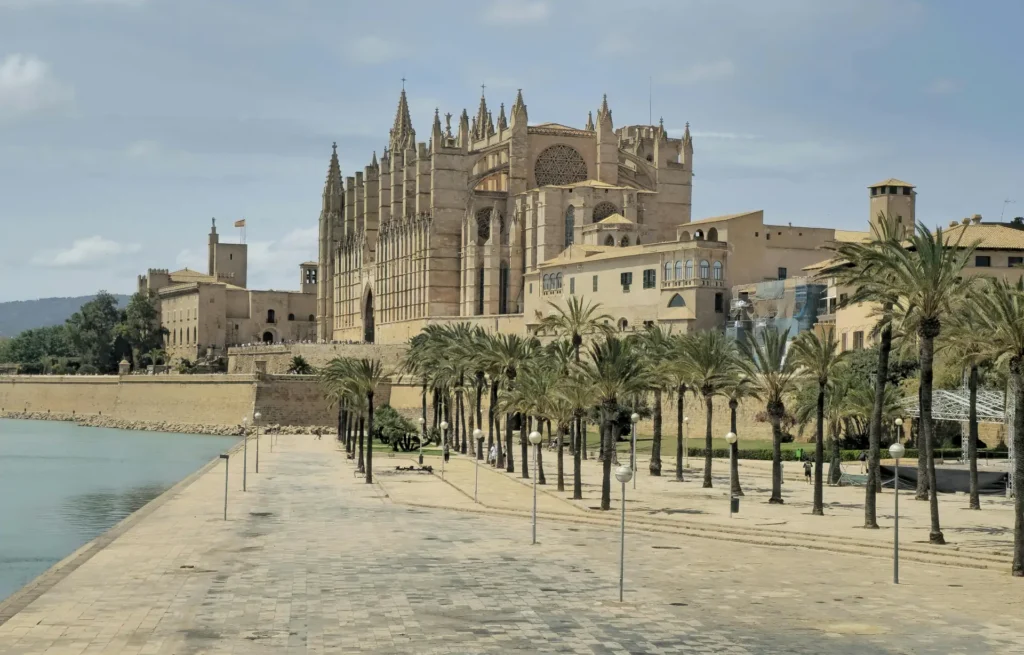
Palm trees and the Gothic facade of the Cathedral of Santa Maria of Palma in Mallorca, a stop on tailor-made Spain trips.
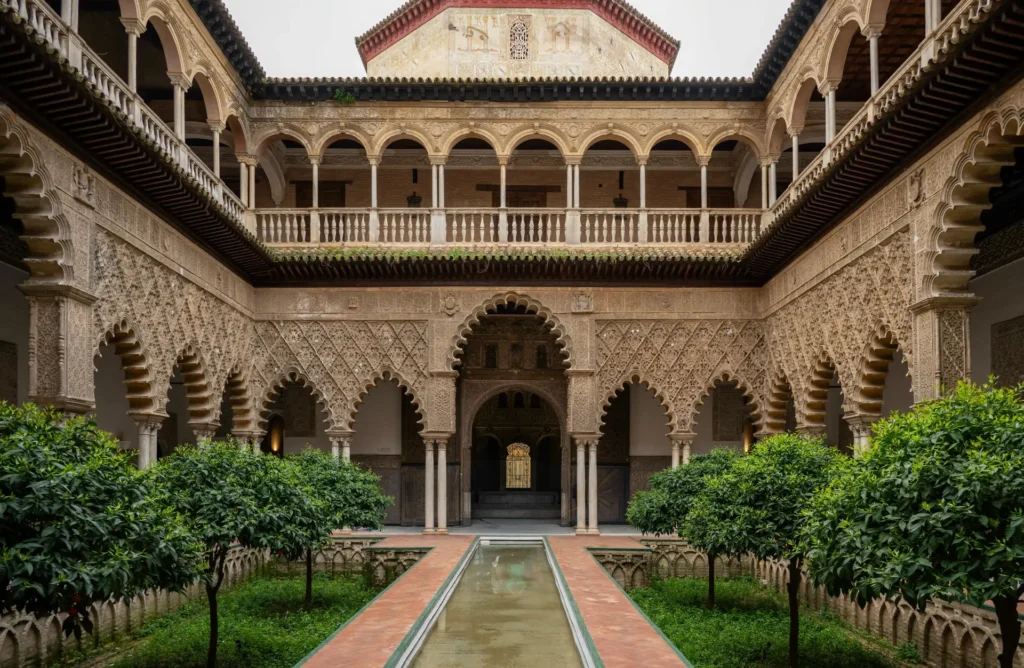
Sunken gardens and reflecting pools surrounded by polylobed arches at the Patio de las Doncellas inside the Alcázar of Seville.
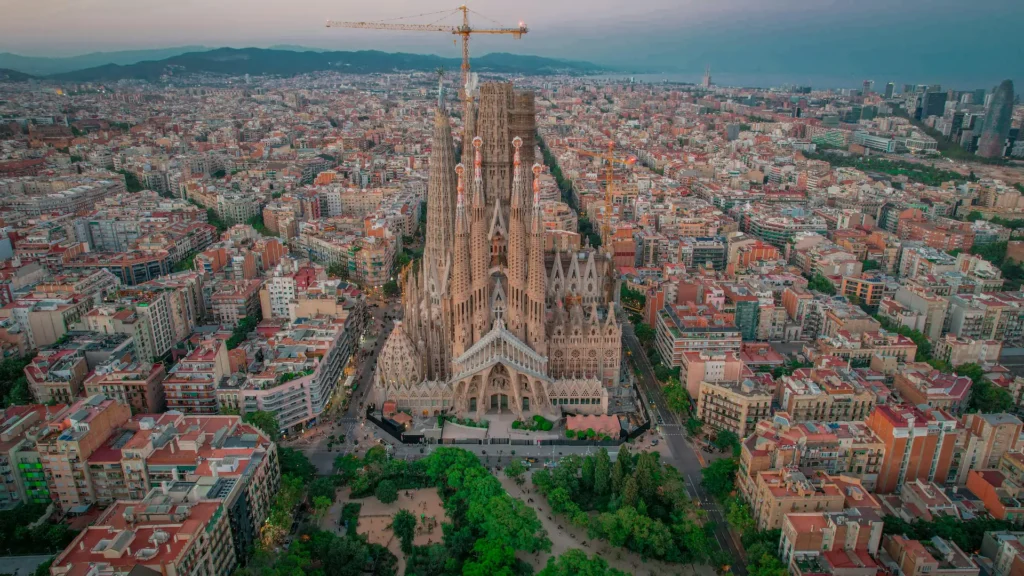
Cranes and stone spires rising from the sculpted facades of the Sagrada Familia basilica in central Barcelona.
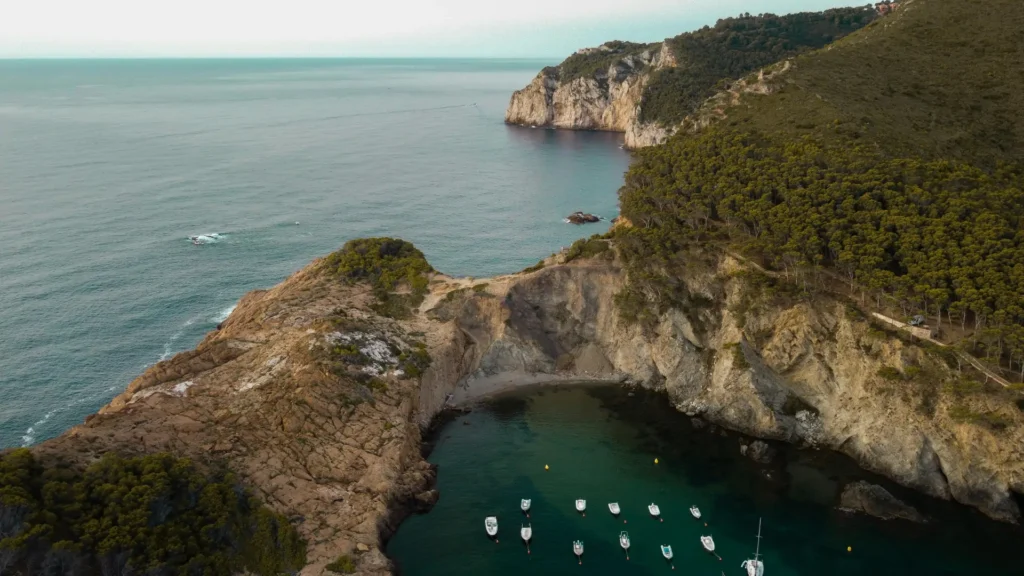
Small white boats anchored in turquoise water below the rocky cliffs of Sa Tuna on the Costa Brava coast of Catalonia.

Have questions about planning your trip to Spain?

How We Plan Spain

Family Trips

A family trip to Spain works because Spain is openly welcoming to kids. Restaurants at ten at night are full of families with small children. A family vacation in Spain hinges on pacing the days around that rhythm. A morning at the Prado or Retiro Park is followed by a long lunch and a pool break at the hotel. Dinner is out at nine. Gilded Travels keeps families on the AVE rather than domestic flights so the day doesn’t disappear into an airport, and we arrange private entry to the Sagrada Familia so the queue that usually eats a family morning in Barcelona never happens.

Couples & Milestones

A honeymoon in Spain offers culinary depth comparable to France or Italy, with a very different coastal pace. A typical trip might open in San Sebastian for four days of pintxos and Michelin-starred counters in a walkable old town, then move south to a private finca in the Tramuntana mountains of Mallorca. These are the restored stone estates that sit an hour inland from the beach resorts most travelers book. Gilded Travels puts private drivers on the wine regions of Rioja and Ribera del Duero so your tasting day ends with you relaxed rather than negotiating an unfamiliar road back to the hotel.

Couples & Milestones

A group trip to Spain almost always centers on a private property big enough to house everyone. The Andalusian cortijo network is one of the most concentrated luxury rental markets in Europe: restored haciendas in the countryside outside Seville and Granada, with eight to twelve bedrooms and a private chef on staff. The Mallorca interior runs the same playbook with fourteenth-century fincas renovated to modern standards. From either base, the group can spend its days exploring Jerez sherry country or hiking the Sierra Nevada. Sailing trips off the Costa Brava are another natural day plan. The shared meals back at the cortijo or finca are usually what the group remembers.

Seasonal Timing in Spain

The answer to when is the best time to visit Spain depends on where in the country you are going. May and September work across more of Spain than any other months. The south is still walkable, and the Mediterranean is warm enough to swim without the August crowds. September is also when the Rioja vendimia begins, which is the most interesting time to visit a bodega because the estates are actively harvesting. Summer sends travelers north to the Basque Country or offshore to the Balearics where the heat is coastal. Winter works well for museum trips in Madrid, though most Balearic coastal properties close until spring.

Apr – May
Jun – Aug
Sep – Oct
Nov – Mar
Weather

Mild, 60-75°F

Very Hot, 85-105°F

Warm, 65-80°F

Cool, 45-60°F

Crowds

Moderate

Peak capacity

Moderate

Low

Risks

Occasional Spring showers

Extreme heat in the south, coastal traffic

Early Autumn rain in the north

Many coastal and island closures

Best Regions

Andalusia, Madrid, Barcelona

Basque Country, Asturias, Balearic Islands

Rioja, Andalusia, Madrid

Canary Islands, Madrid museums

Our Spain Outlook for 2026

Spain in 2026 is loudly questioning whether it wants more tourists, and the local pushback against overtourism is reshaping where the smarter trips are happening. The short-term rental rules in Barcelona and parts of the Canaries have tightened meaningfully. The country is openly redirecting its tourism strategy toward regions that haven’t been overrun. For travelers used to defaulting to the Barcelona-Madrid-Seville template, the more interesting Spain trip in 2026 is the one that takes the redistribution seriously.

The redistribution away from Barcelona

Barcelona is still Barcelona, and most first-time visitors will still see it. But the conversation around overtourism in the city has reached the point where hotels are increasingly the better play over apartments, and shoulder-season trips are increasingly the better play over August. Andalusia is absorbing a lot of the redirected interest. Granada and Córdoba alone justify a week between them, and the white villages and road-trip-friendly geography turn the rest into a genuinely engaging drive. For travelers who want southern Spain without the Costa del Sol resort grid, it’s a strong fit.

Paradores and the rise of stay-with-story

The Spanish parador network is having its moment with American travelers, and it’s not hard to see why. These are government-run hotels installed in converted historic buildings: former castles and monasteries, plus fortified palaces built into the walls of medieval cities. They give travelers a way to anchor a road trip around stays that double as the experience itself. The parador in Granada sits inside the Alhambra grounds. The one in Santiago de Compostela is a 16th-century pilgrim hospital. This kind of lodging is increasingly displacing the international hotel chains in serious itineraries, and Spain has the deepest network of it anywhere in Europe.

Canary Islands as a year-round destination

The Canaries used to register, for Americans at least, as a Northern European winter sun escape and not much else. That’s changing. Tenerife and Lanzarote for the volcanic landscapes, Gran Canaria for the climate, La Palma for the night skies. The combination of stable winter weather and well-developed airlift has made the islands a credible alternative for travelers who would otherwise default to the Caribbean for January and February, and the volcanic national parks give the trip a backbone the Caribbean cannot match.

Frequently Asked Questions About Spain

I never would have picked Mallorca as a vacation destination. My wife likes the beach, I like adventure. Gilded Travels created the perfect one-week itinerary that had us exploring the beautiful beaches, hiking through rustic mountain villages, and dining at incredible restaurants on the island. No day felt too full or too empty. It was the perfect balance. Neither of us felt like we needed a “vacation from our vacation.” I definitely recommend Steven and Gilded Travels and will be using them again!

Makis S.

Deerfield, IL

Spain is part of our Mediterranean collection. Explore the other destinations in the region to find the right combination for your trip.

Let’s Talk About Your Spain Itinerary

Tell us which regions catch your interest and how you prefer to spend your days. We will take it from there.

Scroll to Top